History of the Memorial Plaza
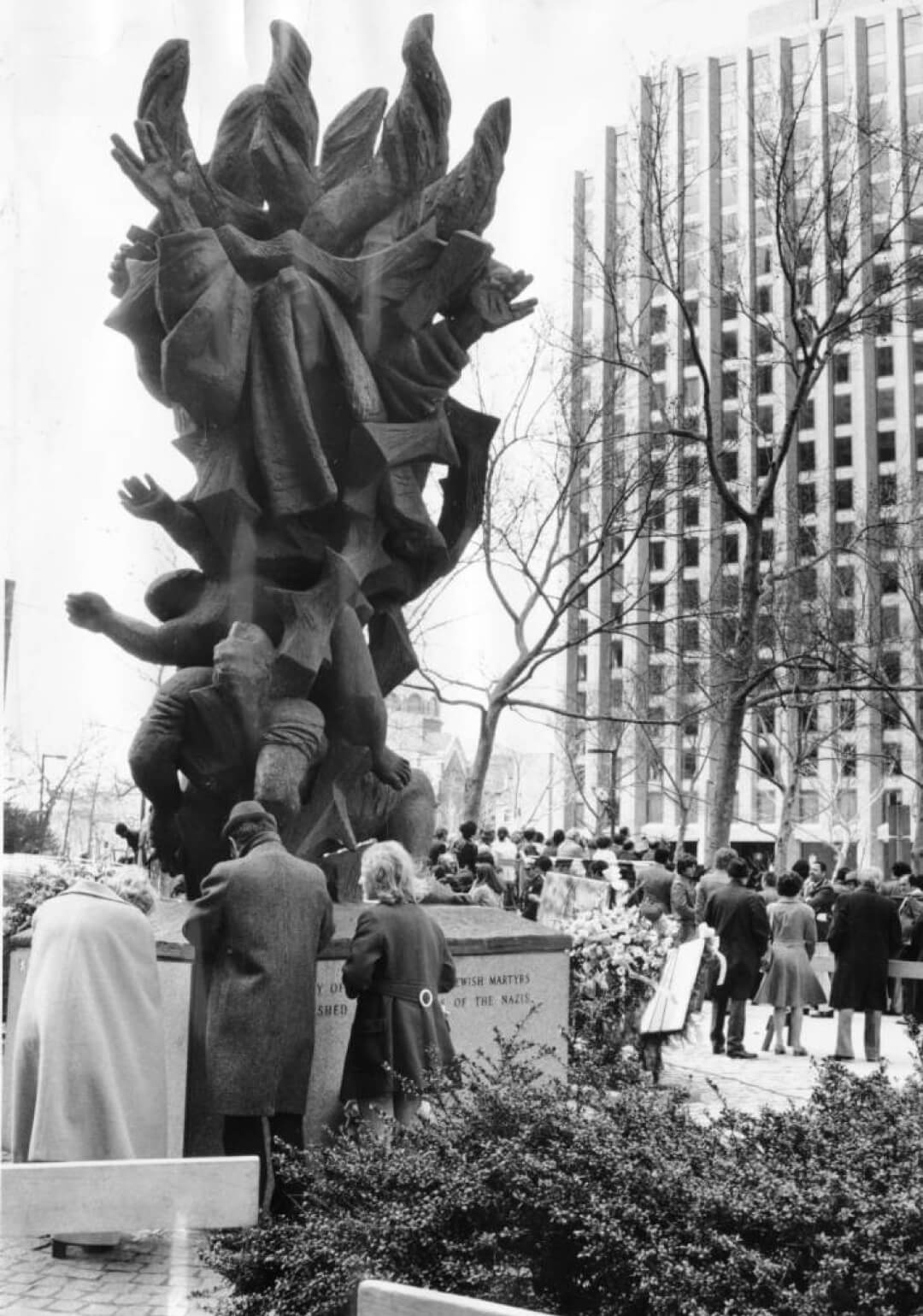
Monument to Six Million Jewish Martyrs
On April 26, 1964, a group of Holocaust survivors and community leaders, including Dalck Feith, Harold Greenspan, Abram Schnaper, and Joseph Smukler together with the Association of Jewish New Americans and the Federation of Jewish Agencies of Greater Philadelphia, presented to the City of Philadelphia a towering bronze sculpture that constituted the first public monument in North America to memorialize the victims of the Holocaust.
Titled Monument to Six Million Jewish Martyrs, this sculpture was created by internationally renowned artist Nathan Rapoport, who was also a Holocaust survivor. To this day, the Monument remains the only major public monument in Philadelphia dedicated to the remembrance of the Holocaust.
This striking bronze sculpture portrays powerful symbols of resilience and remembrance. The monument stands as a poignant tribute to the six million Jewish lives lost during the Holocaust and serves as a reminder of the enduring strength of the Jewish community.
Visit the Horwitz-Wasserman Holocaust Memorial Plaza centered around the nation’s oldest Holocaust monument. Open 365 days a year, the Memorial Plaza welcomes all visitors to learn and reflect about the Holocaust.
Plan Your Visit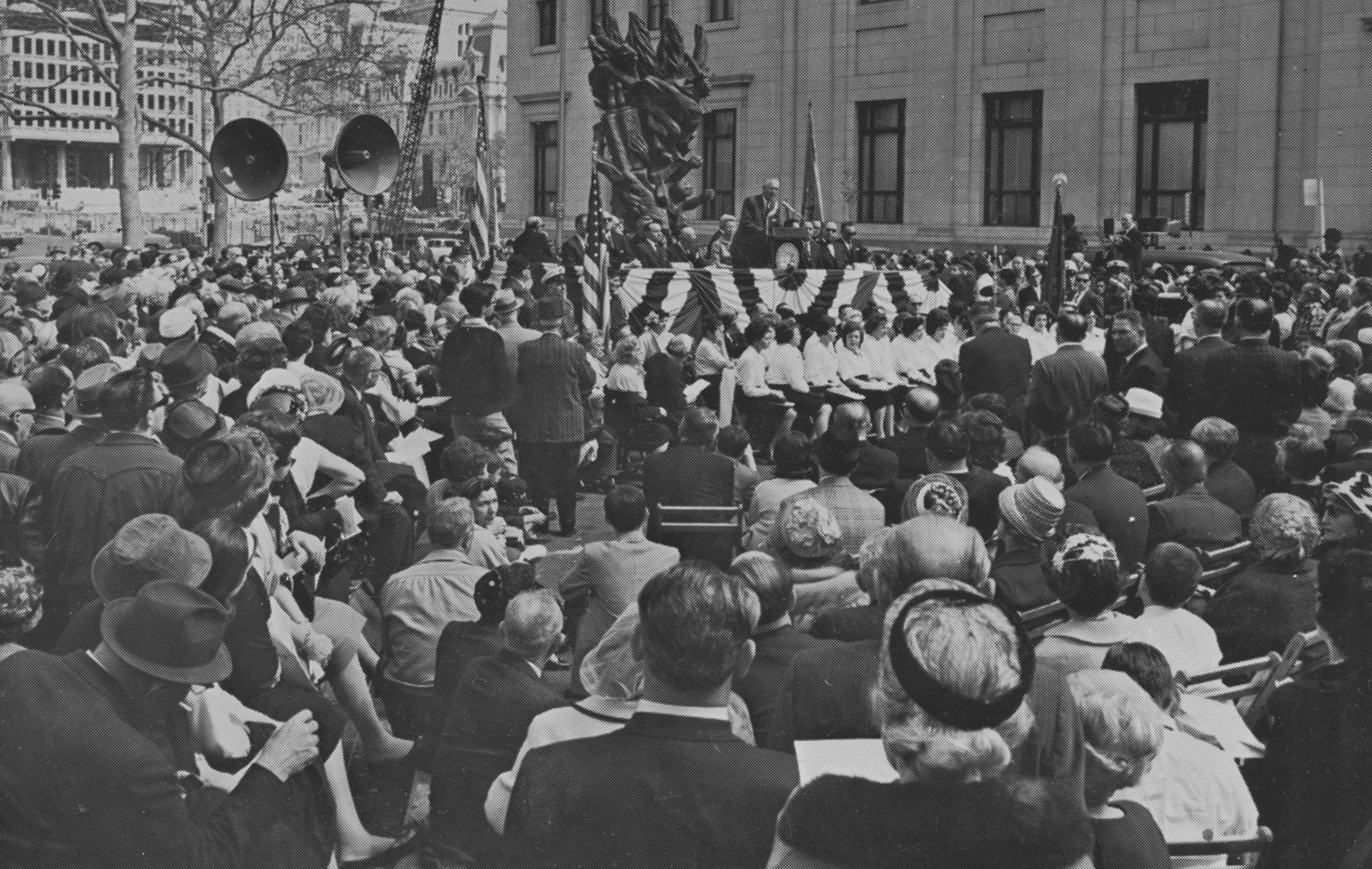
Monument dedication ceremony, April 26, 1964
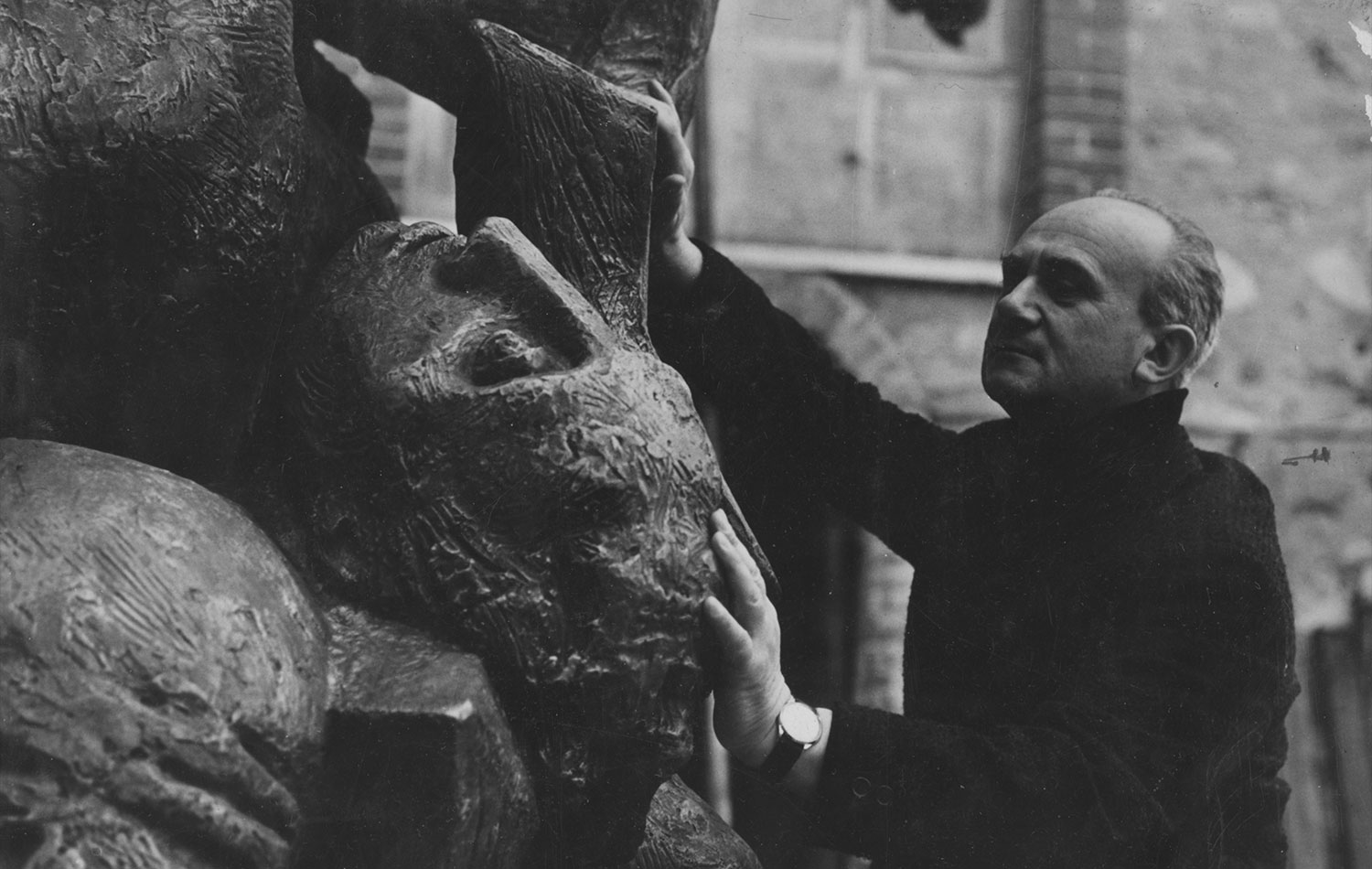
Nathan Rapoport with his iconic contribution to Holocaust remembrance, 1964
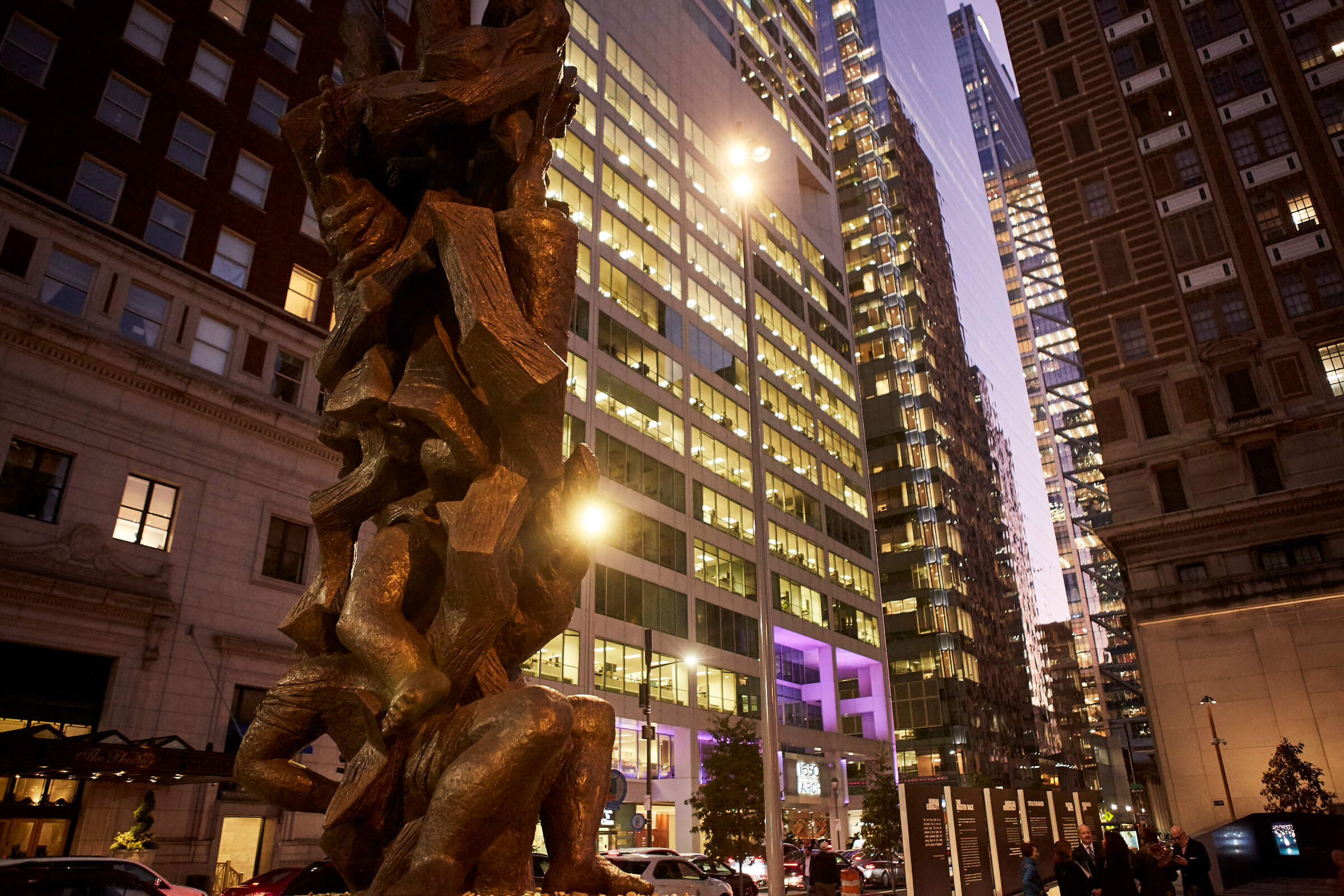
EVENING VISITORS
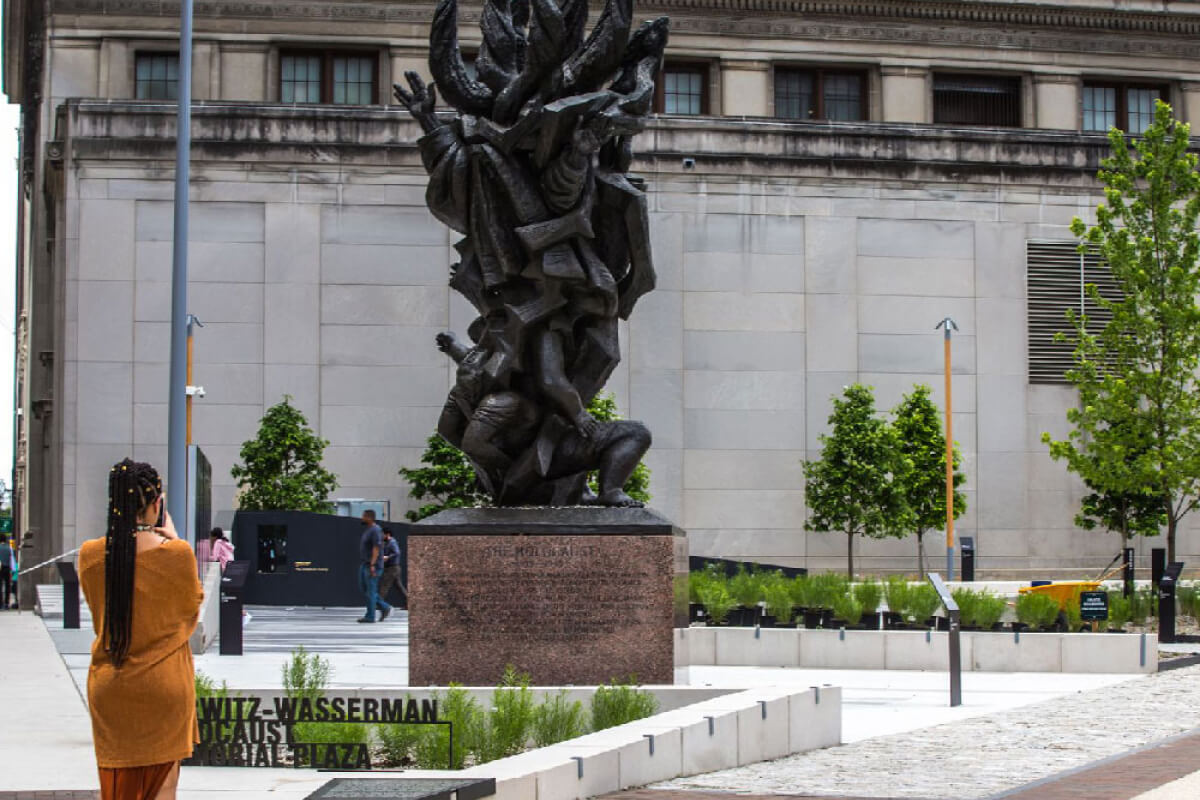
SPRING PLANTING, 2021
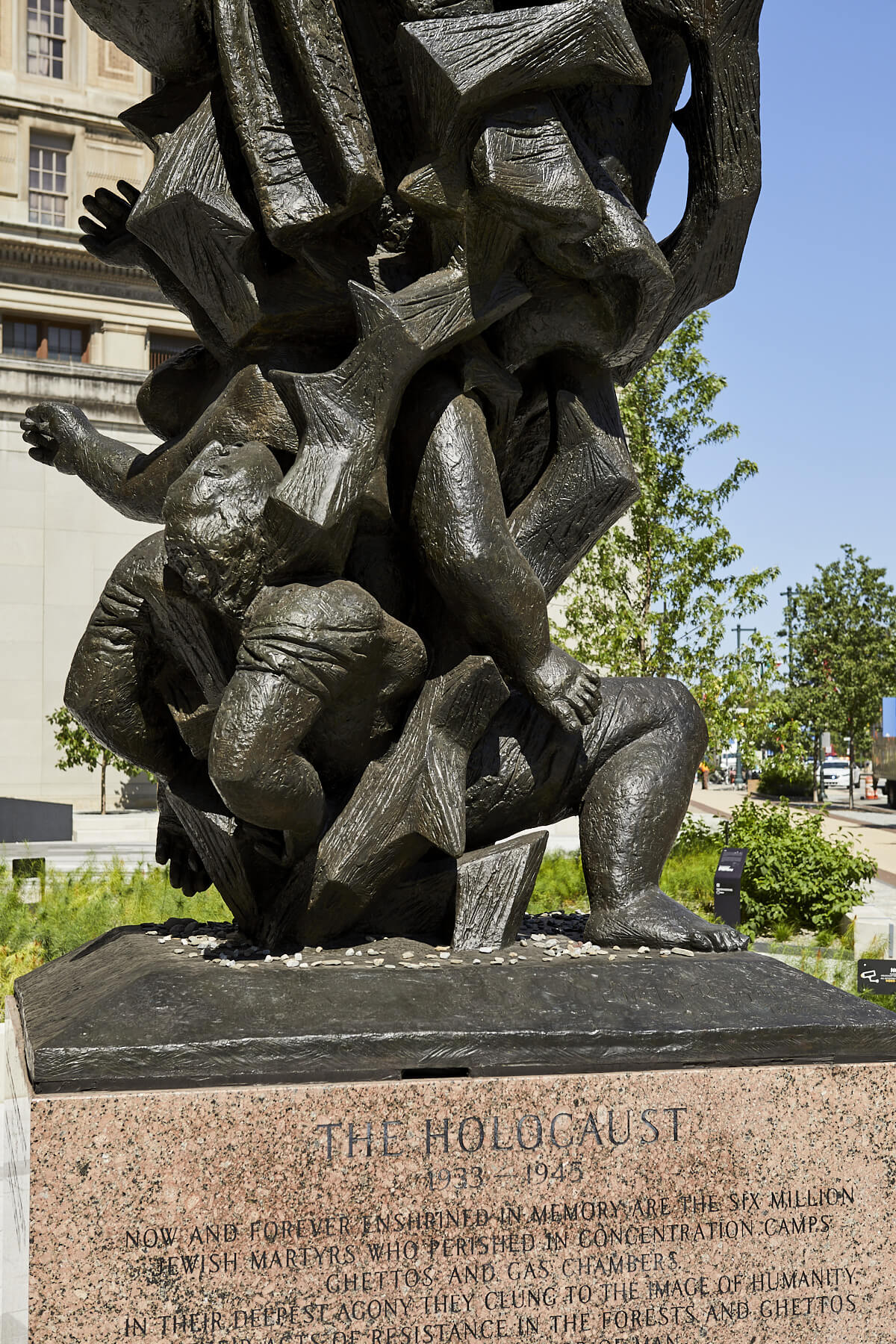
MONUMENT CLOSE-UP
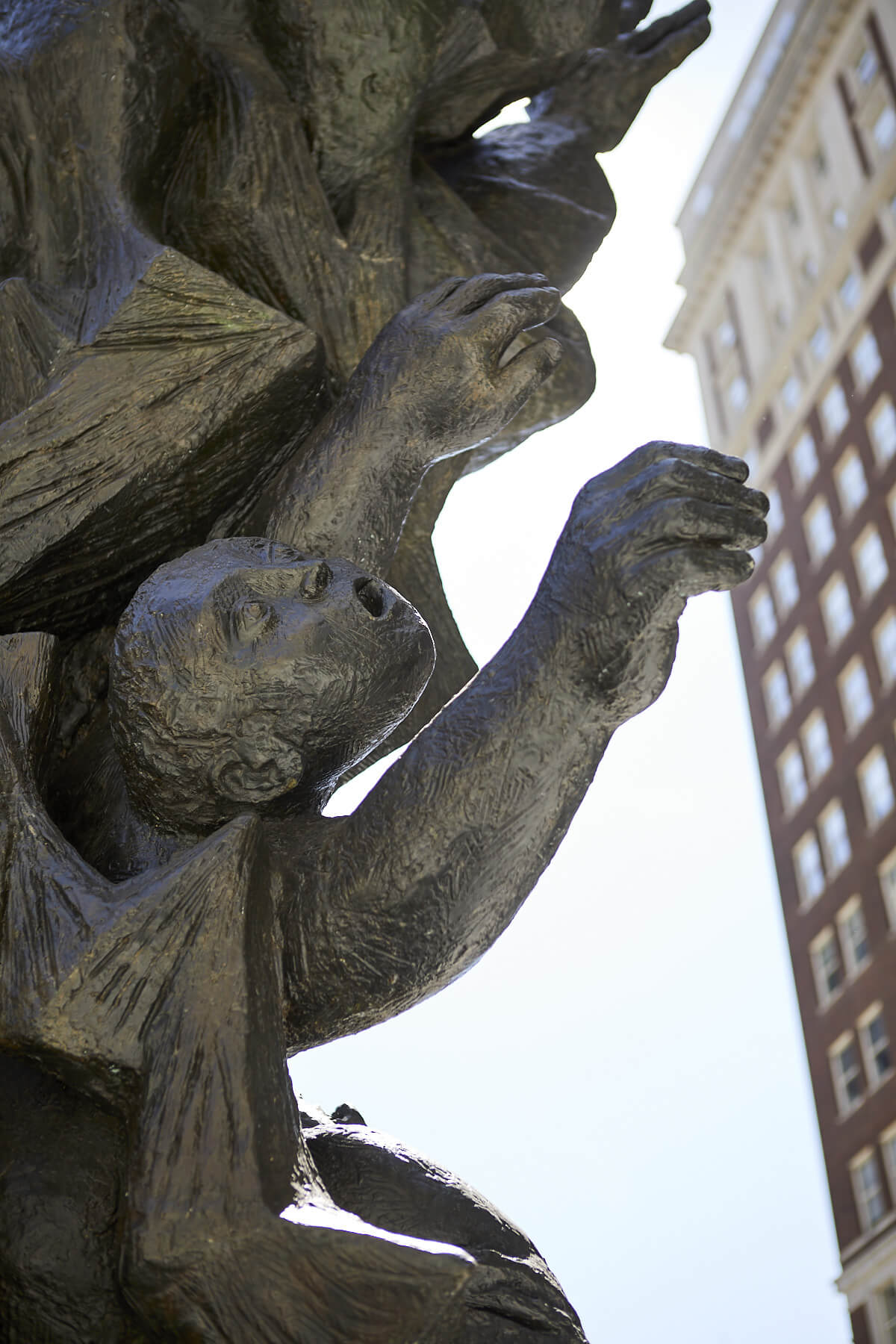
MONUMENT CLOSE-UP
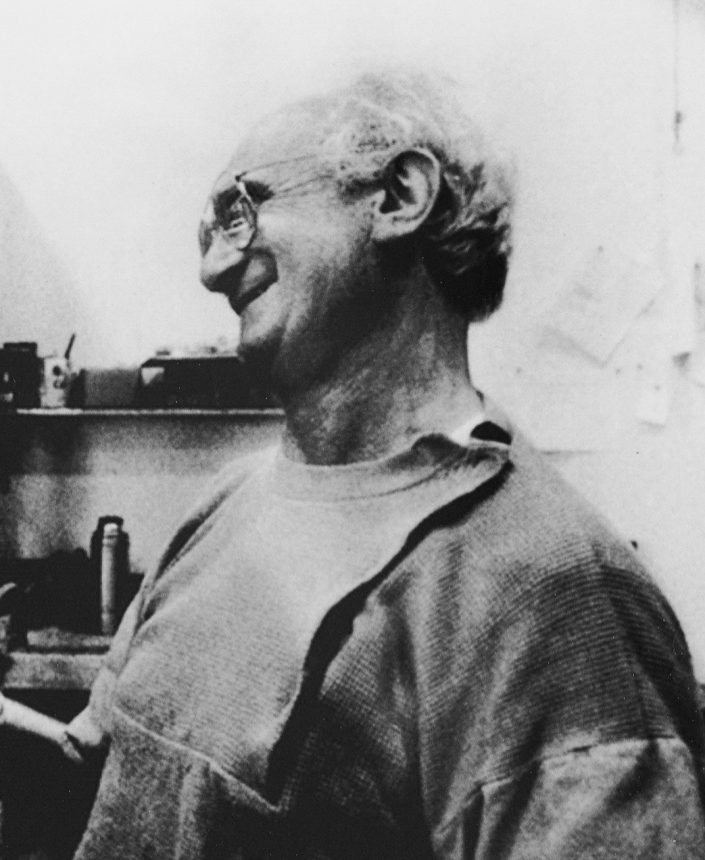
About the Artist
Nathan Rapoport (1911–1987) was a prominent Polish-born, Jewish sculptor known for his powerful and emotive works of art. He became renowned for his ability to capture the depth of human emotion and convey historical narratives through his sculptures.
As a young man living in Warsaw, Poland, Rapoport was a well-respected artist, receiving commissions and scholarships to create and study art. When Germany invaded Poland in 1939, he left Warsaw to join the Polish army. He was unable to find the army regrouping in the forests and fled east to Soviet controlled territory. There, he and other Jewish refugee artists found work creating sculpture for the Communist Party. This ensured their protection and safety in the Soviet Union until the Nazi invasion in 1941. Then, Rapoport and his wife attempted to flee once again, but was sent to a forced labor camp in Siberia. He soon made powerful connections who helped him move out of the camp and he became a state sculptor making works honoring Soviet heroes. Rapoport remained in Russia until 1946 when he returned to Warsaw. In 1947 he began work on his first monument to the Holocaust—the Monument to the Ghetto Heroes, which was dedicated in Warsaw in 1948.
Soon after the Warsaw Monument’s dedication, Rapoport moved to Israel, and then later immigrated to the United States. His artistic contributions have had a lasting impact, with his works displayed in various sites around the world, including multiple works in Israel, Poland, and the United States. His art serves as a reminder of the atrocities of the Holocaust and the resilience of the Jewish people. Rapoport passed away in 1987, leaving behind a powerful legacy in the field of Holocaust memorial art.